Showing posts with label formal/Informal. Show all posts

Monday, August 24, 2020

Saturday, December 28, 2019

Formal & Informal English+Word List PDF

We use formal English in serious situations, when applying for a job, essays for school and with people we don’t know well.
Informal English is used with friends, relatives and on social media mostly.
Formal English is more common when writing, informal English is more common when we speak.

formal: I have decided to refuse his offer.
informalI’ve decided to refuse his offer. (informal: I’ve=contraction)
formal: The person whom I met in Ireland was very friendly.
informal: The person I met in Ireland was very friendly.
(informal: relative clause without the relative pronoun whom)
formal: I ate your cake this afternoon.
informal: Ate your cake this afternoon.
formal: apologize
informal: say sorry
formal: as soon as possible
informal: ASAP

Usage of modal verbs

Can I offer you something new? (neutral)
May I offer you something new? (more formal)
Might I offer you something new? (very formal)
Examples of Less Formal & More Formal Expressions 
    Less Formal                                             More Formal 

a lot of                                  many, much, numerous, a great deal of 
about                                    regarding 
after that                               thereafter 
also / plus                             moreover 
answer                                  respond 
ask for                                  request 
at first                                   initially 
better                                    superior, improved 
breathing                              respiration 
buy                                       purchase 
cheap                                    inexpensive 
drink                                     beverage 
eat                                         consume  
end                                       terminate, complete 
enough                                 sufficient 
fix                                         repair 
get                                        obtain, acquire 
help                                      assist, assistance 
home                                    residence 
in the end                             finally, ultimately 
I've got to / I have to            I must, It is necessary for me to 
kind of / sort of                    rather, somewhat 
leave                                    depart 
let                                         permit
live                                       reside 
lively                                   animated 
need                                     require, necessity/requirement 
next/later                             subsequently 
OK / all right                       acceptable, satisfactory 
old                                       elderly 
people                                 persons, individuals 
people say that…                it is said that… 
right away                           immediately 
seem                                   appear 
show                                   demonstrate 
so                                        therefore, thus, consequently 
start                                     begin, commence 
start again                           resume 
stop                                     cease 
sweat                                  perspire, perspiration 
tell                                      inform 
that's why                           therefore 
try                                      attempt 
very, really                         quite 
want                                   desire, would like, wish 
watch                                 observe 
whole                                 entire 
work                                   function 
wrong                                 incorrect 
you (generic)                      one, everyone


Tuesday, October 15, 2019

Formal English. Functions : Asking a Favour, Asking for Approval, Asking People to Wait


Asking a Favour
  • Can you give me a hand with this?
  • Could you help me for a second?
  • Can I ask a favour?
  • I wonder if you could help me with this?
  • I could do with some help, please.
  • I can’t manage. Can you help?
  • Give me a hand with this, will you?
  • Lend me a hand with this, will you?
  • Could you spare a moment?
  • I need some help, please.
Asking for Approval
  • Do you think it’s all right to do it?
  • What do you think about (me doing that)?
  • Do you think / reckon I ought to (do it)?
  • What would you say if I (did it)?
  • Would you approve of (doing something)?
  • What is your attitude to the idea of…
  • Are you in favour of (me doing something)?
  • You are in favour of … aren’t you?
  • Do you think anyone would mind if I…
  • Do you think it would be really awful if I..
Asking People to Wait
  • Hang on a moment / a mo.
  • Give us a second.
  • Half a moment / a mo.
  • I’ll be right with you.
  • Sorry, I’m a bit tied up right now.
  • Wait and see.
  • You’ll just have to be patient.
  • Give me a chance.
  • Don’t be so impatient.
  • We wish to apologize for the delay 

How to Be More Polite in English: Useful Phrases for Speaking Polite English

Sunday, November 4, 2018

Formal Writing


Rules of Formal Writing

Formal English follow rules of grammar very strictly. Sentences tend to be long and complex. The vocabulary tends to be elevated, using big words and avoiding colloquial or slang vocabulary. It avoids split infinitives and prepositions at the end of sentences.
In formal English you have to be aware of the followings:


  • Don’t start a sentence with ‘And’, ‘Also’, ‘But’, ‘So’, ‘Or’, ‘Even so’.  Instead use ‘In addition’, ‘However’, ‘Hence’, ‘Consequently’, ‘Alternatively’, ‘Nevertheless’.
  • Don’t start a sentence with ‘Therefore’. Instead write, for example, ‘We therefore…’.
  • Don’t start a sentence with ‘Then’ or ‘Now’ unless it is a command.
  • Don’t use ‘don‘t’, or any other shortened negative such as ‘isn’t’, ‘hasn’t’, ‘wasn’t’, etc. Use ‘does not’, ‘is not’, etc. instead.
  • Don’t use ‘!’ or ‘&’ or ‘/’. It is also very unusual to see ‘?’ in a paper. Don’t put questions in a paper unless you really know what you are doing.
  • Don’t use e.g. or i.e. or etc.
  • When referring to the number of countable objects, use words rather than figures when the amount is less than twenty. E.g. Don’t write “we used 3 methods” – instead write “we used three methods”.
  • Don’t use ‘OK‘. Use ‘acceptably’, ‘permissible’, ‘satisfactory’, etc instead.
  • Don’t use ‘got‘. Instead use ‘obtained’.
  • If you can, try to use the passive voice for some of the time when describing your results. Using ‘we’ in every sentence is a bit boring.
  • List things properly using ‘and‘ between the last two items. E.g. Don’t do ‘we used three methods A, B, C.‘ Instead you should write either ‘we used three methods: A, B, and C.’ or ‘we used three methods, namely, A, B, and C.’
  • You cannot have a paragraph that is just one sentence.
Tips for Vocabulary for Academic Essays + Templates for cover letters

Sunday, October 21, 2018

How to change Basic English into Business English

Want to get that job? Improve your image? Sound more professional? Learn how to transform simple English words to business English vocabulary and watch your career take off! I'll show you how to change "get" to "receive", " make sure" to "ensure", "give more information" to "elaborate", and more. These small vocabulary changes will make a huge difference in your English level.


TRANSCRIPT:

Monday, August 27, 2018

Formal / Informal Letters

Formal letters

  • Formal letters are sent to organizations, government departments, chair holders, etc to make complaints, requests, inquiries, orders etc. 
  • In case of formal letters, the person to whom you are addressing the letter is not a friend or any other person known to you. 
  • Your tone is full of respect making use of formal words and sentences to create a nice impression on the recipient. 
  • Formal letter follow a set format where you write the name, designation, and address of the recipient on the top left while your own name and address at the top right. 
  • You sign off at the bottom left under yours truly or yours faithfully.

Informal letters

  • Informal letters are written to friends and relatives. 
  • The purpose of writing a letter is not to make a complaint or inquiry, and the tone is also casual. 
  • The words used can be colloquial and slang, and you are not there to create an impression. 
  • Informal letters can be considered a freestyle swimming where you are free to write in the style and tone as you wish. 
  • There is no set format, and there is no need to be using formal style and tone.
                                                                  From www.eslbuzz.com

Wednesday, August 24, 2016

Formal or Informal English?

  • We use formal language in situations that are serious or that involve people we don’t know well. 
  • Informal language is more commonly used in situations that are more relaxed and involve people we know well.
Formal language is more common when we write; informal language is more common when we speak. However, there are times where writing can be very informal, for example, when writing postcards or letters to friends, emails or text messages. There are also examples where spoken English can be very formal, for example, in a speech or a lecture. Most uses of English are neutral; that is, they are neither formal nor informal.

Formal language and informal language are associated with particular choices of grammar and vocabulary.

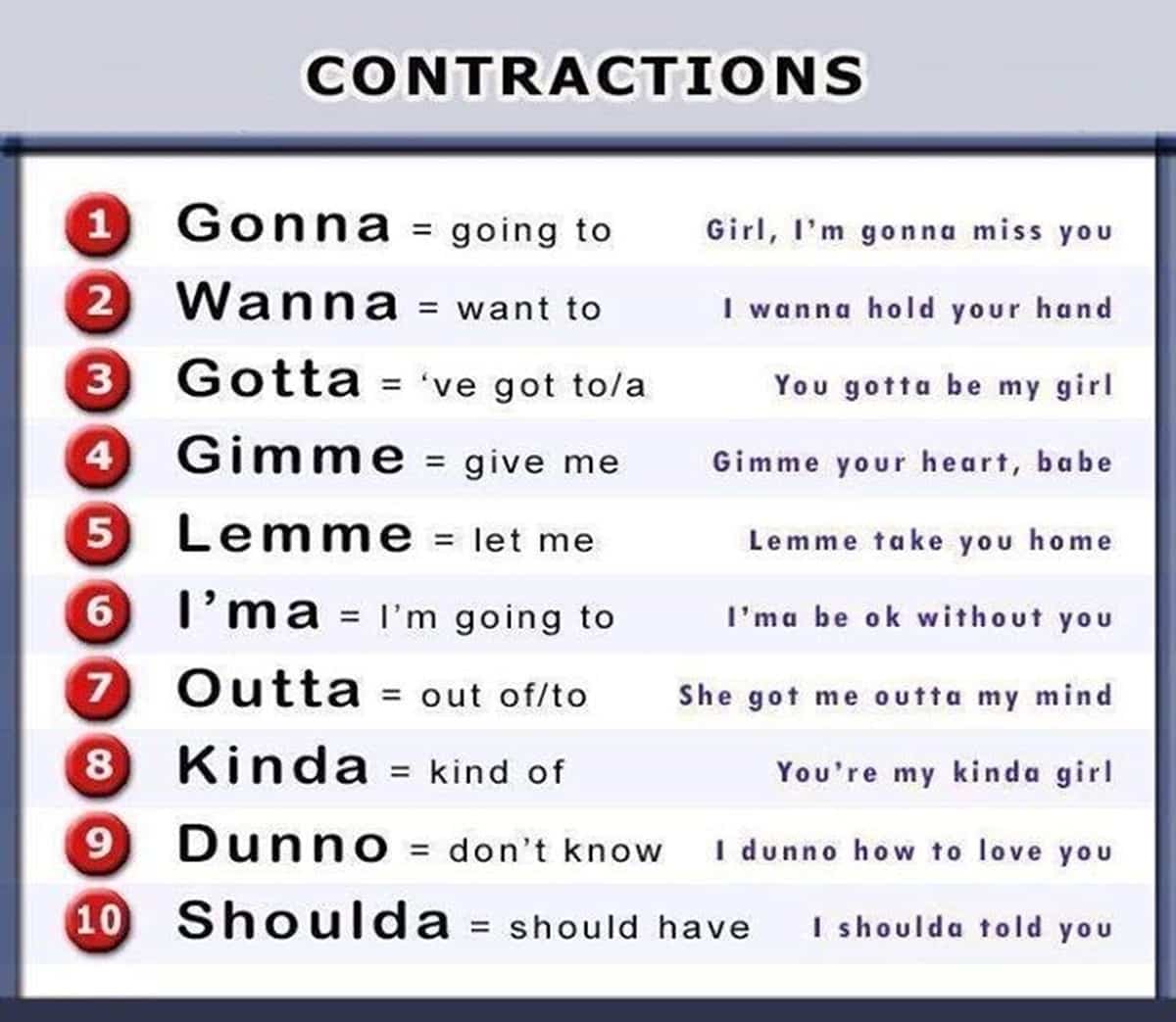
Contractions, relative clauses without a relative pronoun and ellipsis are more common in informal language.  (Cambridge Dictionary)

EXAMPLES


Click here for more examples

Thursday, July 3, 2014

How to make your writing more formal?

While communicating with business people, the language you use must be consistently appropriate in style and tone.

The following are the basic features of formal writing.


  • Write all verbs in full. Do not use contracted forms like don’t or can’t.
  • Do not use abbreviations such as info (for information) and asap (for as soon as possible).
  • Limit the use of passive voice. 
  • Watch your vocabulary. Certain words are considered informal. Examples are: fix, begin, start, OK, thanks, etc. Avoid them in formal writing. Instead, use words like repair (for fix), commence (for start/begin), in order / all right (for OK) and thank you (for thanks).
  • Avoid informal intensifiers like really and so. Instead use more sophisticated ones such as extremely, highly, entirely, etc.
  • Limit the use of phrasal verbs. As far as possible avoid using them, but if that is not possible limit their use. It is usually possible to express the same idea using standard verb forms.
  • Certain discourse markers are considered informal. Avoid using them. For example, write incidentally instead of by the way.
  • Do not leave out words. Ellipsis is not acceptable in formal writing. Write ‘I hope to see you soon’ instead of ‘Hope to see you soon.’