Tuesday, April 12, 2022

What Does the Easter Bunny Have to Do With Easter? Easter Bunny Origins Explained + Activities


Who came up with the idea of the Easter Bunny?

According to Time, the concept of the Easter bunny stems from pagan rituals around the vernal equinox (the first day of spring). The pagan goddess of fertility, Eostre, was also symbolized by a hare and eggs. It’s believed that when missionaries spread Christianity throughout Europe, they combined the pagan spring rituals with Easter and resurrection celebrations to make the transition from paganism to Christianity easier for new converts.
In terms of the Easter Bunny’s specific ties to the Christian holiday, German writings from the 1600s were reportedly among the first to mention an Easter hare. The Easter hare (called “Oschter Haws” in German) was said to have left colorful eggs for good children around Easter. Children would sometimes prepare “nests” for the eggs and leave carrots for the hare. German immigrants are believed to have brought the Easter Bunny tradition to the United States around the 1700s.

                                                                                                         Further reading


Thursday, March 24, 2022

Daylight Saving Time

What Is Daylight Saving Time?

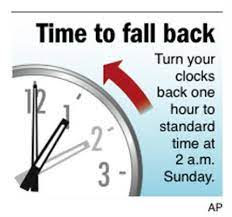
Daylight Saving Time (DST) is the practice of moving the clocks forward one hour from Standard Time during the summer months and changing them back again in the fall. The general idea is that this allows us all to make better use of natural daylight: moving the clocks forward one hour in the spring grants us more daylight during summer evenings, while moving clocks back one hour in the fall grants us more daylight during winter mornings. However, DST has many detractors—and rightfully so! 


The first true proponent of Daylight Saving Time was an Englishman named William Willet. A London builder, he conceived the idea while riding his horse early one morning in 1907. He noticed that the shutters of houses were tightly closed even though the Sun had risen. In “The Waste of Daylight,” the manifesto of his personal light-saving campaign, Willet wrote, “Everyone appreciates the long, light evenings. Everyone laments their shrinkage as the days grow shorter; and nearly everyone has given utterance to a regret that the nearly clear, bright light of an early morning during Spring and Summer months is so seldom seen or used… . That so many as 210 hours of daylight are, to all intents and purposes, wasted every year is a defect in our civilization. Let England recognize and remedy it.”


World War I Led to Adoption of DST

After World War I broke out, the government and citizenry recognized the need to conserve coal used for heating homes. The Germans were the first to officially adopt the light-extending system in 1915, as a fuel-saving measure during World War I. This led to the introduction in 1916 of British Summer Time: From May 21 to October 1, clocks in Britain were put an hour ahead.


  •  Spring forward (turn clocks ahead and lose an hour) 


  •  Fall back (turn clocks back and gain an hour) 


Rain idioms and phrases +A picture quiz about English idioms: Weather

A PICTURE QUIZ

Rainy Season Vocabulary | English Vocabulary Weather with pictures


Wednesday, February 16, 2022

SENSORY MARKETING

Sensory marketing is a potent tool that aims to appeal to at least one of the five senses in order to prompt significant, positive and, in-turn, profitable responses from a business’ main target audience. Sensory marketing provides a more special and memorable experience to its target market. It is also known to perform best when more than one sense is being targeted in one single message or campaign. 


It’s vital that you choose the types of senses that are in coherence with your brand.


SIGHT


Sensory marketing in regards to sight is one of the most important. Individuals like to see things that are aesthetically pleasing and captivating. 


Nowadays sensory marketing can be performed in a multitude of ways. For example, via the creation of graphics, infographics, images, art, posters, advertising banners, videos, text, colours and so much more.


These pieces of marketing can also be encountered anywhere, but in the 21st century, most of these visuals are found digitally, through online platforms such as Facebook, LinkedIn, Instagram, company websites etc.


HEARING


Using sound within your sensory marketing strategy is also a great way to establish your brand and make it more memorable.

Some of the most common forms of hearing sensory marketing nowadays are: voiceovers, sound effects, podcasts, audiobooks, etc. 


TOUCH


Sensory marketing also encompasses touch and in some instances it makes a lot of sense. For example, if you’re buying a new car - you’ll need to do a test-drive first i.e. see how it works, how comfortable it is and how you feel while driving it. The same also applies to clothes - typically, when you’re in a clothing store you touch the fabric to decide whether it’s high quality and you, more often than not, try the clothes on. 


Touching products like this can help your brand in attaining more sales and gives customers more reassurance about buying your products.


TASTE 


Taste can only really be applied to vendors of food and drinks - e.g. drink brands,restaurants, cafes, cheese brands, etc. 

So, how can taste be used in sensory marketing? It’s pretty straightforward - use samples to entice your audience. Many consumers are wary of buying new products, especially if they're used to buying a set list of groceries in the supermarket. However, if you allow them to try a free sample of your food, they’re unlikely to refuse it. Furthemore, if the taste appeals to them - they will be more likely to buy it. 


SMELL


Some smells vividly take you back to a particular moment in your life. The sense of smell should not be underestimated, especially not in your sensory marketing strategy.


Here are some cool ways you can incorporate smell into your marketing strategy:

  1. Special fragrances that line up with your brand and your store. For example, Hollister and Abercrombie and Fitch use their distinct sense to make their customers feel happy and enjoy shopping in the store.
  2. Scents that resemble the environment. For instance, scents of the ocean, freshly cut grass, and other natural smells. These types of scents can sometimes be beneficial in evoking positive emotions in the customers when they’re making purchases in a store. 
  3. The irresistible smell of food! If you’re selling food - a good idea would be to focus on the smell and ensure that it’s appealing and enticing when a customer walks by your restaurant/street food/food stall, etc. This point is also similar to realtors who  bake cookies or cakes in the houses that they have on show, so that people think of the place as more "homely".

THE BENEFITS OF SENSORY MARKETING

  • It’s what customers want.
  • Colors boost your brand recognition.
  • Music and sound help customers remember you.
  • The more senses you include in your marketing, the more brand loyalty you generate.
  • It leaves a good impression, and customers will therefore have positive emotions when they think of your brand.
  • It allows you to appeal to more customers. Not all customers are able to hear or see. Therefore, having an accessible brand, by using more senses in your marketing strategy, is definitely a benefit. 
  • It makes an impact.

EXAMPLES OF SENSORY MARKETING

  • APPLE
 They allow customers to try out all of their technological devices in store. By doing this, customers are able to touch and test the devices before actually purchasing. 

  • MCDONALD’S

 “Ba-da-ba-ba-ba - I’m lovin’ it.” This is one of the most memorable jingles of modern times. McDonald’s has used sound marketing in a way that is easily recognizable and catchy.

  • ROLLS ROYCE

Rolls Royce uses smell. This brand is known for having cars with a special “new car” scent that appeals to many (and not only luxury) car enthusiasts. This scent makes new buyers crave that new car, and entices them to buy a vehicle that’s clean, shiny and completely brand new. It’s an experience, to say the least!


                           Adapted from https://blog.paperturn.com/blog/what-is-sensory-marketing

Thursday, January 27, 2022

Data Privacy Day (28 January)


Data Privacy Day History

Data Privacy Day seeks to raise awareness about the importance of personal information privacy. Businesses and individuals are often unaware of how their data is being used. This observance aims to raise awareness about how data is used or collected. It also aims to create more trust among individuals and businesses.

Data Privacy Day was established in 2008 by the National Cyber Security Alliance. It is observed annually on January 28th.


Data Privacy Day Facts

  • According to security.org, in the U.S, more than 1,000 data breaches occurred in 2020. These breaches affected more than 155.8 million individuals.
  • The average cost of a data breach in the U.S is $8.19 million. The average cost of a data breach worldwide is $3.9 million.
  • According to the Insurance Information Institute, there were nearly 1.4 million reported cases of identity theft in 2020, resulting in a $4.5 Billion in total loss.


Data Privacy Day Top Events and Things to Do

  • Make sure your data is secure. A few ways to ensure your data is protected is by using two-factor authentication, using different passwords, and by using a VPN. You can learn more about VPNs Here.
  • Reevaluate your password strength. If you have used the same password for years, consider updating it or changing it to something new. Use phrases or sentences, or even a random password generator. Be sure to write down your new password somewhere so you don't forget it.
  • Watch a film about data breaches and data security to better understand the risk involved. Here are our suggestions:

                                     The Great Hack (2019)
                                     Anon (2018)
                                     Zero Days (2016)

                                                                                                                         Taken from https://www.wincalendar.com/Data-Privacy-Day

Tuesday, November 23, 2021

ADVENT CALENDARS + activities

You don't need an Advent calendar to know that Christmas is coming, but opening a little numbered door to reveal a prize is an idea that everyone—religious or not—can get behind. Here’s a brief history of Advent calendars and a few designs of this popular tradition.

ADVENT CALENDAR ORIGINS

Advent calendars begin on December 1 and mark the 24 days before Christmas. Today, most Advent calendars include paper doors that open to reveal an image, Bible verse, or piece of chocolate. The tradition dates to the mid-19th century, when German Protestants made chalk marks on doors or lit candles to count the days leading up to Christmas.

                                                                          Taken from A Brief History of Advent Calendars BY SCOTT ALLEN

EXAMPLES  


24 Super Low-Prep Advent Activities

  1. Decorate the Christmas tree
  2. Set up the nativity scene (if you have one)
  3. Read a classic Christmas book together
  4. Make paper snowflakes
  5. Write a letter to Santa and put it in the mail
  6. Drink hot apple cider or hot cocoa
  7. Wear something red or green
  8. Sing Christmas carols
  9. Eat breakfast for dinner
  10. Make a Christmas card for a teacher or friend
  11. Eat a candy cane
  12. Watch A Charlie Brown Christmas (or another Christmas movie)
  13. Wrap presents together
  14. Take cookies (or a candy cane) to the neighbors
  15. Look at photos from last Christmas
  16. Have a cozy PJ’s day
  17. Make snow angels (or leaf angels if there is no snow)
  18. Call a family member or friend who lives far away
  19. Color Christmas pictures for Santa or the elf
  20. Do a random act of kindness for someone
  21. Have a simple picnic next to the Christmas tree
  22. Take a walk (or drive) to look at Christmas lights
  23. Have a dance party to Christmas music
  24. Set out cookies and milk for Santa


                                                                                                 https://modernparentsmessykids.com/free-printable-advent-calendar-jokes-every-day-2/                  

                           Because Christmas is fun!

Thursday, November 18, 2021

THANKSGIVING VOCABULARY + THANKSGIVING FOOD GAME

                    THANKSGIVING VOCABULARY 

+

                       THANKSGIVING FOOD GAME


When is Thanksgiving 2021?

Thanksgiving doesn’t always fall on the same day of the yea, but it always falls on the same day of the week, Thursday.


This year, Thanksgiving will fall on Nov. 25, which is the fourth Thursday of the month. This has been the way that the date for the holiday has been determined since 1941. Before this, the holiday was traditionally held on the last Thursday of November.


The reason for this is a bit unclear. Going back to the earliest days of the tradition, Historians believe that Thursday was chosen because it was one of the more convenient days of the week to have an annual feast. For the early Puritan settlers, Sunday was the Sabbath. It’s likely that the early days of giving thanks were purposely scheduled not to interfere with the Sabbath. Also, Fridays were commonly days of fasting, making them inconvenient feast days for many people.


Since ministers would often give lectures on Thursdays in the New England area, Thursday seemingly became a convenient day for Thanksgiving. As the years went by, it became a tradition. By the time George Washington issued a proclamation for a day of Thanksgiving, Thursday had already been associated with feasts of that nature.

                                                                                                                                 By Michael Hollan | Fox News

How Is Thanksgiving Celebrated?

Thanksgiving in America is very family-focused. During the day, family and friends will come together and eat a large meal and spend quality time together.
Traditional Thanksgiving meals include dishes like sweet potato casserole with marshmallows, stuffing, green beans, cranberry sauce, fruit pies, and other in-season foods like walnuts, potatoes, corn, squash, and mushrooms. Of course, this also includes the main course for meat-eaters, a turkey! 
Some families like to watch a Thanksgiving Day Parade or American football. The holiday has lost its religious associations over time, and is now mostly a time to practice gratitude and perhaps help others in need.
https://www.twinkl.es/event/thanksgiving-2021                                                                  

Thursday, October 28, 2021

Spooky Halloween Stories


Echoes of the past

A young bachelor at the beginning of his career became very successful very quickly, so he bought himself a house. One morning, he awoke to the sound of running water. He rushed to the bathroom and saw that the bathtub faucet was running on full blast. He was perturbed by this, as he lived alone. A week later, it happened again, only this time it wasn’t just one faucet—it was all of the faucets in the house. The young man called a repairman to fix the pipes and the water damage…but, as it turned out, the pipes weren’t broken. The repairman, a local, seemed visibly shaken. “What’s wrong?” the bachelor asked. “The woman who lived here before you,” said the repairman, “she drowned in that bathtub.”


After hours

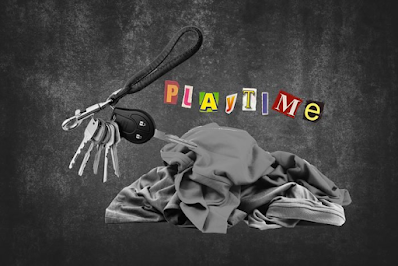
It was nine o’clock, time for the store to close. Valerie, Ginny, and Kelly were the only ones working. As they were cleaning up the store, a pile of shirts fell to the floor. None of the girls touched it. “It’s probably the ghost,” Ginny said. “Very funny,” said Kelly. “No, really,” Valerie replied. “He’s a little boy. He likes to play.” Kelly still didn’t take them seriously, though; she thought they were teasing her because she was younger. But when she went into the backroom to get her keys to go home, she saw a flash of a young boy in the mirror next to her. When she looked back, her keys had been placed on the floor.


Three’s a crowd

Two sisters were at home while their parents were out at an event one evening. They stayed up late, talking and telling stories in the older sister’s room. Suddenly, their conversation was interrupted by the sound of loud music. They looked at each other, confused and unsure of where the music could be coming from. The older sister got out of bed and began walking down the hallway. It sounded like the music was coming from their parents’ room. She peered into the dark room, saw her father’s laptop open—screen on, music blaring. And right then, the music stopped.

Scared, the girl ran back to her room, where her younger sister was waiting on the bed. Frightened, she shut the bedroom door behind her and got back under the covers, holding her little sister tight. They heard slow, heavy footsteps one after another, heading toward their end of the hall. When the footsteps stopped—BOOM, BOOM, BOOM! Three hard knocks on the bedroom door. No one came in, but they certainly didn’t try to leave the room for the rest of the night.

                                                                          Taken from Reader's Digest

Read more stories here

Thursday, November 12, 2020

PERSONAL PRONOUNS (BEGINNER)

SubjectObject
Ime
youyou
hehim
sheher
itit
weus
youyou
theythem

We use subject pronouns as the subject of a verb:

I like your dress.You are late.

He is my friend.

It is raining.

She is on holiday.

We live in England.

They come from London.


We use object pronouns as the object of a verb:


Can you help me, please?
I can 
see you.
She doesn't 
like him.
saw her in town today.
We 
saw them in town yesterday, but they didn't see us.


and after prepositions:

She is waiting for me.
I'll get it 
for you.
Give it 
to him.
Why are you looking 
at her?
Don't take it 
from us.
I'll speak 
to them.


BE CAREFUL! THE IMPERATIVE DOES NOT HAVE A SUBJECT.

Come here!                                           Don't go there!                

Wash your hands!                                  Wear a mask!

Click on the link for further reading and activities